Project phase

Rethinking Know
the Dangers

Growing Know
the Dangers

Know The Dangers started as a Minnesota site focused on synthetic drug risks. Over time, the crisis shifted and the site did not keep up. The design was cluttered, the structure was hard to follow, and it did not work well on phones. The most important content – how to get help, how to use naloxone, and stories of recovery – was buried. People who came looking for answers often left without finding what they needed.

We stepped back and treated it as a full restart. The goal was simple: turn the site into a clear, calm place to learn about opioids and find help. I reworked the structure around real questions people ask. We added tools like a naloxone finder map and a better resources directory, and rewrote key pages in a voice that is direct and supportive instead of cold or clinical. The result is a site that now serves a much wider audience and helps people move from “scared and searching” to “I know what to do next.”

Visit Website

Know the Dangers - Older Version
Project phase

The Challenge

We needed to move from a static info site to a real support tool. That meant serving several groups at once: people using drugs, family members trying to help, and community partners. The old site could not do that. It was narrow in scope, written for one issue, and hard to use on a phone. We had to reorganize a large amount of content, lead with the most urgent actions, and still keep the tone gentle and clear. All of that had to work in stressful moments, not just in calm ones.

My Role

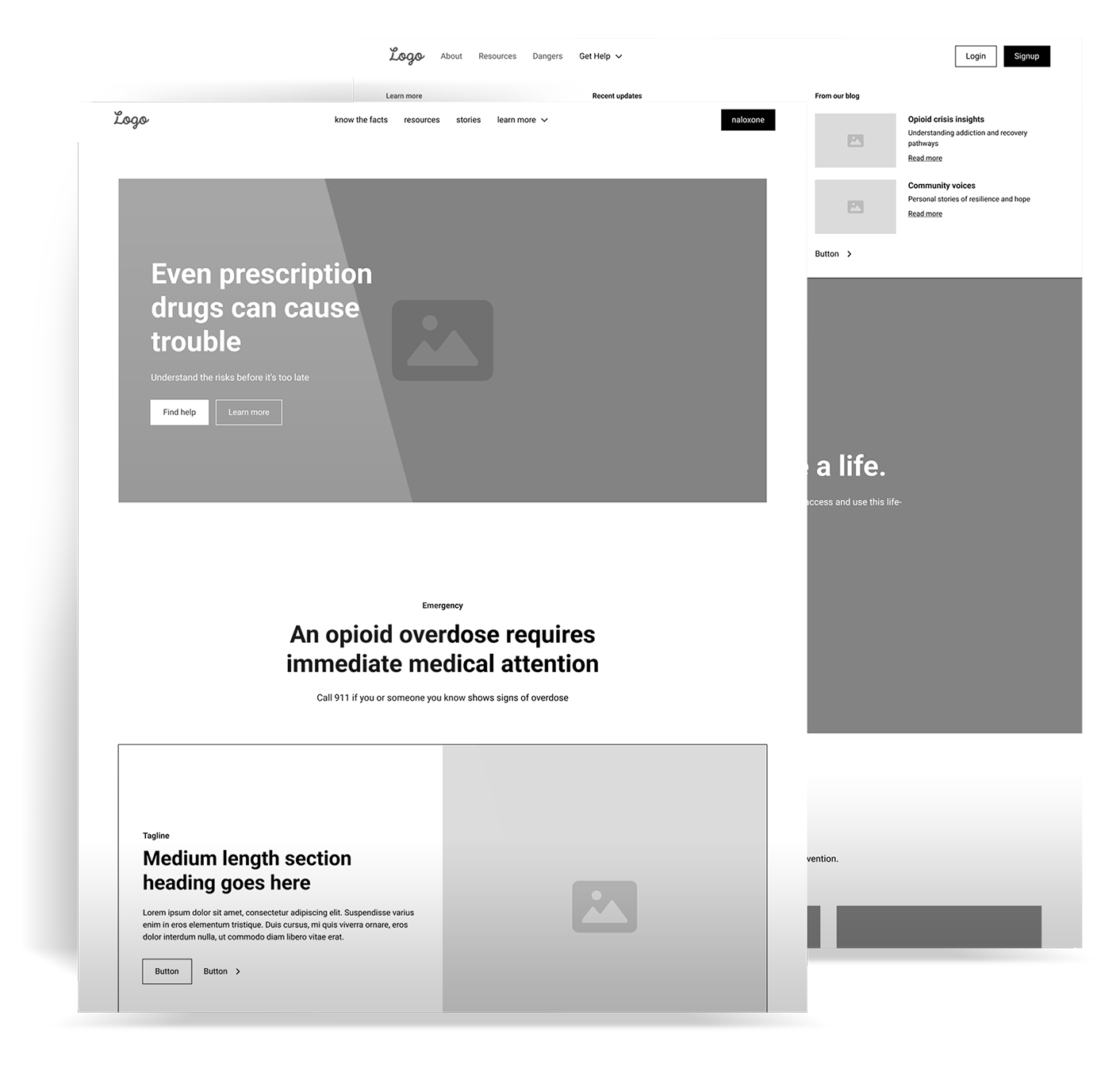
I led UX, UI, and front‑end development from first concepts through launch. I started by reviewing analytics, talking with stakeholders, and collecting feedback from partners who work in treatment and prevention. From there I mapped new user journeys, built wireframes in Figma, and worked with the team to agree on what needed to be front and center. Once we had a plan, I designed the new interface and built the front-end with HTML, CSS, and JavaScript on top of a custom WordPress setup so the team could keep content fresh.

Concept to Creation

Advanced Web Design Techniques

Creative Direction
CSS
Development
Graphic Design
HTML
Information Architecture
jQuery
Product Design
Prototyping
SEO (Search Engine Optimization)
User Experience
User Journey
UX/UI Design
Web Design
Wireframing (UX/UI)

Know The Dangers is now a central tool in the state’s response to opioids. More people are finding the site, staying longer, and using its most important features, like the naloxone map and treatment links. The content is easier to keep current, and the design removes barriers instead of adding them. For me, the win is simple: people who come here scared or unsure now have a clear, fast way to find help and share that help with others.

Wireframes and User Interface

I designed separate paths for the main audiences while keeping them in one shared site. Pages start with urgent actions – overdose help, treatment, naloxone – and then move into deeper learning. Navigation is simple, headings are plain, and calls to action like “Find Naloxone Near You” are easy to spot and tap, even on a small screen.

Design and Customization

Visually, the site had to feel hopeful and serious at the same time. I used high‑contrast colors and large type so text is easy to read. Warnings and safety tips stand out without feeling alarmist. Photos and illustrations show real people and support, not just pills and stats. I built the design system in Figma and kept it in step with the rest of the campaign so printed pieces, video, and web all feel like one effort.

Development and Implementation

After design approval, I built a custom WordPress theme with clean HTML, CSS, and a small amount of jQuery for interactive pieces. The naloxone finder uses a map and live data so people can see nearby sources quickly. The resources section lets visitors filter by topic without reloading the page. I focused on fast load times, strong mobile behavior, and accessibility – proper headings, ARIA labels, keyboard support, and alt text – and wired up analytics to track key actions like “Get Help” clicks and map searches.

Outcome:

Know The Dangers is now a central tool in the state’s response to opioids. More people are finding the site, staying longer, and using its most important features, like the naloxone map and treatment links. The content is easier to keep current, and the design removes barriers instead of adding them. For me, the win is simple: people who come here scared or unsure now have a clear, fast way to find help and share that help with others.

Visit Website

Related Projects: